Featured
Assessing Debt Relief Companies to Choose the Right Match...
The 5-Second Trick For Tools Offered for Your Financial R...
The Best Strategy To Use For How to Contact Practical Adv...

The Best Strategy To Use For How to Contact Practical Advice for Speaking With Creditors & Improving Payment Terms Experts with Your Financial Recovery Process
Table of Contents
That maximizes money in the short-term, and you may have 3 to 4 years to conserve toward the settlement quantity. Very dangerous to credit history, primarily because of missed out on settlements and a negative "cleared up" mark that might remain on your credit scores report for as much as 7 yearsMay be just choice if other alternatives (debt combination, equilibrium transfer bank card, financial debt forgiveness) aren't possibleTypically requires a fee to the 3rd celebration, which might offset some or every one of the savings from debt settlementMay aid you stay clear of insolvency if you've missed out on several paymentsNot all financial institutions deal with debt negotiation firms Financial debt mercy may be ideal for you if you are experiencing a financial difficulty that makes it virtually impossible to pay for your financial obligation balances.

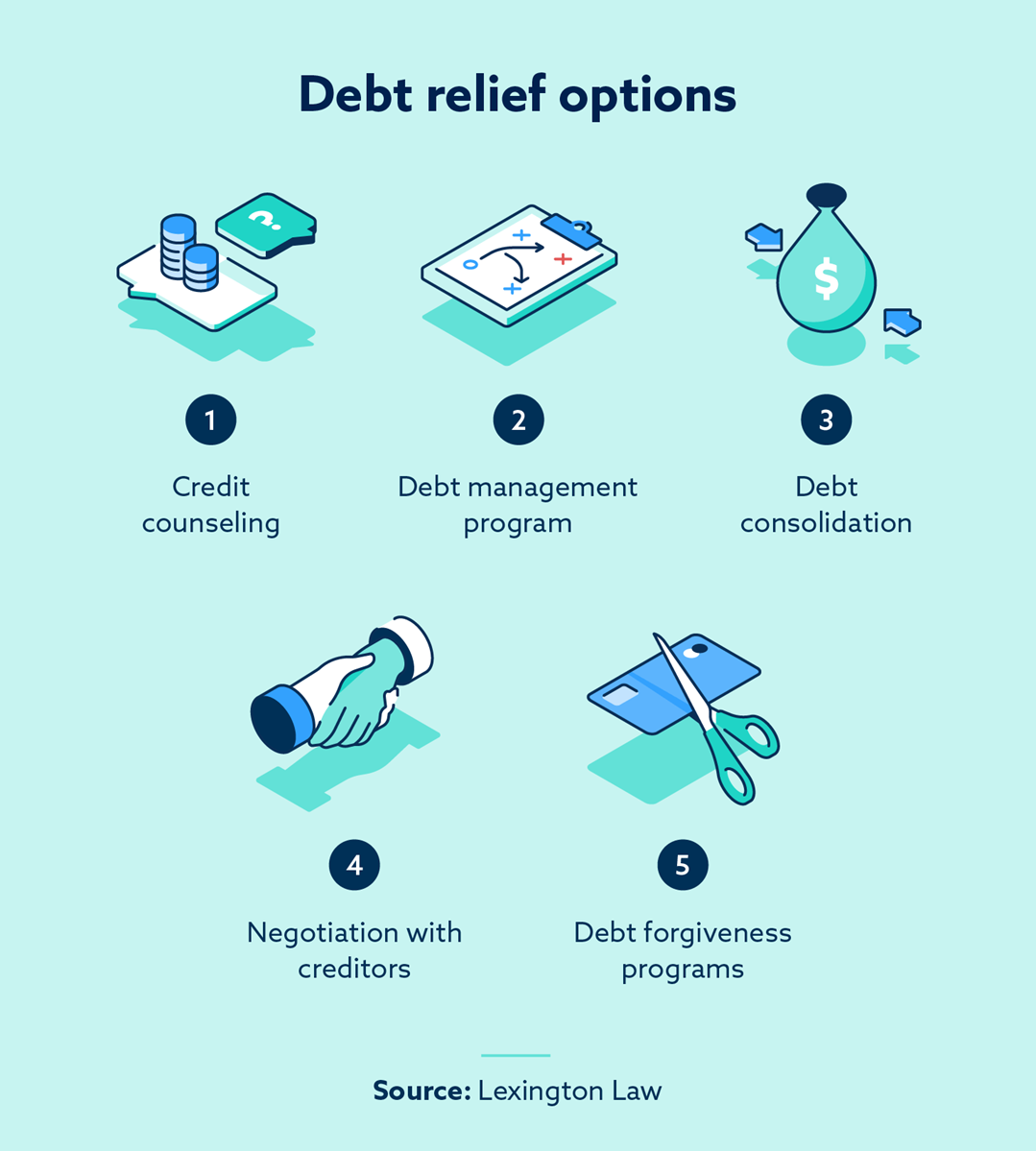
With a DMP, you make one monthly settlement to the credit score therapy firm. Those funds are after that distributed to financial institutions of your unsecured financial debts, such as charge card and installment loans. The firm deals with your lenders to minimize rates of interest or waive fees, but some creditors might reject such giving ins.
A financial debt loan consolidation loan combines your eligible financial debts into one brand-new finance. It can aid you pay for debt if you're able to protect a loan rate that's less than the ordinary rate of the accounts you're combining. You have to refrain from racking up financial obligation on those recently cleared accounts or your financial debt can expand also higher.
That gives you plenty of time to remove or considerably reduce your balance while making interest-free settlements.
The Basic Principles Of Support Available Via Certified Counselors
You may need it if your creditor or a debt collection agency ever attempts to accumulate on the financial obligation in the future. The letter might verify you do not owe what the debt collector's records reveal. Yes, in most cases, the internal revenue service takes into consideration forgiven financial debt as gross income. When a loan provider forgives $600 or more, they are called for to send you Form 1099-C.
Financial obligation mercy or negotiation generally hurts your debt. Anytime you resolve a financial debt for much less than you owe, it may appear as "cleared up" on your credit rating record and affect your credit report for seven years from the day of negotiation. Your credit history can also drop considerably in the months resulting in the mercy if you fall back on settlements.
A Biased View of Restoring Personal Financial Standing the Right Way
This circumstance commonly results from underreporting revenue, not submitting returns on time, or disparities found throughout an Internal revenue service audit. The effects of collecting tax obligation financial obligation are significant and can consist of tax liens, which give the IRS a lawful claim to your residential property as security for the financial obligation.
Greater interest rates on offered credit rating. Salaries and Bank Accounts IRS can impose (confiscate) incomes and savings account to please the financial debt. Minimized income and disruption of essential financial procedures. Home Seizure In extreme situations, the internal revenue service can confiscate and market home to cover the financial obligation. Loss of beneficial properties and potential displacement.
Clinical depression, anxiety, and other mental health concerns. Social Preconception Encountering lawful activity from the IRS can bring social preconception. Damage to online reputation and relationships. Work Opportunities A poor credit history because of exhaust financial debt can limit job opportunity. Problem searching for or maintaining a job. Government Advantages Tax obligation debt may impact eligibility for federal government advantages, such as Social Protection and Medicaid.
Ways to Contact APFSC Today Fundamentals Explained
The OIC thinks about numerous elements, consisting of the taxpayer's income, expenses, asset equity, and capability to pay. Successfully bargaining an OIC can be complex, requiring an extensive understanding of the IRS's standards and a strong argument for why your deal straightens with your ability to pay. It is very important to note that not all applications are accepted, and the procedure requires in-depth economic disclosure.
The IRS assesses your general financial circumstance, including your income, expenses, possession equity, and capacity to pay. You need to likewise be existing with all filing and repayment needs and not remain in an open personal bankruptcy proceeding. The IRS also considers your compliance background, reviewing whether you have a record of prompt declaring and paying tax obligations in previous years.
Their Team Philosophy to Achieve Debt Freedom Fundamentals Explained
The application procedure for a Deal in Concession includes a number of detailed actions. You should complete and submit IRS Form 656, the Offer in Compromise application, and Type 433-A (OIC), a collection details statement for individuals. These types call for detailed monetary info, consisting of details concerning your earnings, financial debts, expenditures, and assets.
Back tax obligations, which are overdue taxes from previous years, can dramatically enhance your overall IRS debt otherwise resolved promptly. This debt can build up interest and late repayment charges, making the original amount owed a lot bigger over time. Failure to pay back taxes can cause the IRS taking enforcement actions, such as providing a tax obligation lien or levy against your residential or commercial property.
It is very important to resolve back tax obligations asap, either by paying the total owed or by setting up a settlement plan with the internal revenue service. By taking aggressive actions, you can stay clear of the build-up of additional rate of interest and fines, and avoid more aggressive collection activities by the internal revenue service.
One usual reason is the idea that the taxpayer can pay the sum total either as a round figure or via a layaway plan. The IRS likewise considers the taxpayer's earnings, costs, asset equity, and future earning capacity. If these factors suggest that the taxpayer can afford to pay greater than the supplied quantity, the internal revenue service is likely to reject the offer.
What Does Calculating the Expense of Debt Forgiveness Programs Mean?
Dealing with IRS debt can be complex and complicated. Tax experts, such as Certified public accountants, tax obligation lawyers, or registered representatives, can supply vital help.

Table of Contents
Latest Posts
Assessing Debt Relief Companies to Choose the Right Match Things To Know Before You Get This
/images/2025/11/17/how_does_debt_settlement_work_.png)
Not known Facts About Mandatory Documentation for Fee Waivers and Discounts for Bankruptcy Counseling: Who Qualifies?

The 5-Second Trick For Tools Offered for Your Financial Recovery Journey
More
Latest Posts
Assessing Debt Relief Companies to Choose the Right Match Things To Know Before You Get This
Not known Facts About Mandatory Documentation for Fee Waivers and Discounts for Bankruptcy Counseling: Who Qualifies?
The 5-Second Trick For Tools Offered for Your Financial Recovery Journey